

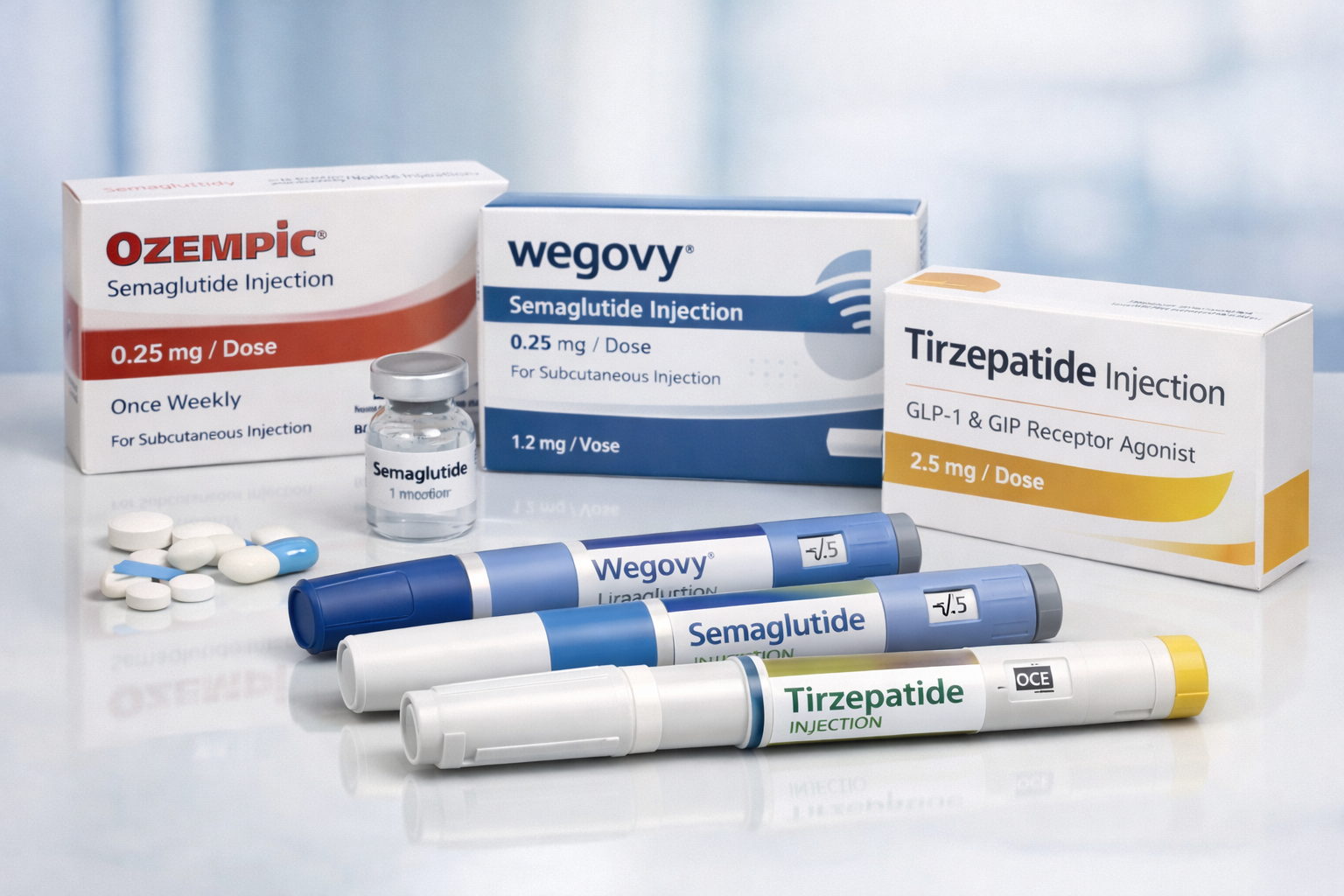
If you have been following weight loss medications over the last few years, you have probably heard names like Ozempic, Wegovy, semaglutide, and tirzepatide. Until now, most of the most effective options required injections and came with high out of pocket costs for many patients. That is starting to change.
Novo Nordisk has announced an oral Wegovy pill, with new pricing programs beginning January 5, 2026. This is a major shift in obesity and metabolic health care and it opens the door for many more people to access effective treatment. Here is what this update actually means and how it fits into the bigger picture of weight loss medications.
What Is Wegovy and What Is New About the Pill?
Wegovy is a medication approved specifically for chronic weight management. It contains semaglutide, which belongs to a class of medications called GLP 1 receptor agonists. These medications work by helping regulate appetite, hunger signals, blood sugar, and insulin levels.
Until now, Wegovy was only available as a once weekly injection. The new update is that Wegovy will also be available as a daily oral pill.
In a 64 week clinical trial, adults taking the Wegovy pill lost an average of about 14 percent of their body weight. That worked out to roughly 33 pounds based on average starting weights in the low 230s. Nearly one in four participants lost 20 percent or more of their body weight. In comparison, people taking placebo lost only about 2 to 3 percent.
This level of weight loss is far beyond what we typically see with lifestyle changes alone.
Why the Pricing Matters So Much
One of the biggest barriers to weight loss medications has been cost. Injectable Wegovy has often been out of reach for many patients due to limited insurance coverage and high list prices.
With the Wegovy pill, patients with commercial insurance may pay as little as $25 per month. For patients paying cash, pricing starts around $149 per month for lower doses, with higher doses priced higher.
This is a meaningful change. Lower pricing combined with a pill option means more access, more consistency, and more realistic long term treatment for patients who want or need this kind of support.
Ozempic vs Wegovy
Ozempic and Wegovy both contain semaglutide, but they are approved for different uses. Ozempic is FDA approved for type 2 diabetes and is often prescribed off label for weight loss. Wegovy is FDA approved specifically for obesity and chronic weight management and uses higher target doses. It is also FDA approved for the treatment of MASH (metabolic dysfunction associated steatohepatitis) or fatty liver with stage F2 and F3 liver fibrosis as well as for reducing risk of a recurrent event in people with obesity who have had a stroke or heart attack prior.
From a medication standpoint, they are very similar. From an insurance and regulatory standpoint, they are treated very differently.
What Is Semaglutide?
Semaglutide is the active medication found in Ozempic, Wegovy, and the new Wegovy pill.
It works by reducing appetite, increasing feelings of fullness, slowing stomach emptying, and improving insulin sensitivity. Semaglutide has been studied extensively and has strong evidence supporting its use for both diabetes management and weight loss.
What About Tirzepatide?
Tirzepatide is a newer medication that targets two hormone pathways instead of one. It activates both GLP 1 and GIP receptors. It is currently available as Mounjaro for diabetes and Zepbound for weight management. In clinical studies, tirzepatide has produced even greater average weight loss than semaglutide for many patients. However, it is currently only available as an injection and often comes with higher costs and insurance barriers.
Pills vs Injections
Many patients ask whether pills work as well as injections. Injections are taken once weekly and offer very consistent absorption. Pills are taken daily and require more specific instructions to absorb properly. The Wegovy pill must be taken on an empty stomach with a small amount of water, and patients must wait at least 30 minutes before eating, drinking, or taking other oral medications. This matters for effectiveness. For most people, the best medication is the one they can take consistently and tolerate well.
These Medications Do More Than Affect Weight
GLP 1 and related medications are not just about weight loss. They are increasingly used to support insulin resistance, prediabetes, type 2 diabetes, metabolic syndrome, polycystic ovary syndrome, and cardiovascular risk reduction. Weight loss is often the most visible outcome, but the metabolic benefits go much deeper.
Lifestyle Still Matters
Even in the Wegovy pill studies, participants were instructed to follow a reduced calorie diet and increase physical activity. Medication works best when paired with adequate protein intake, strength training, sleep support, stress management, and individualized nutrition guidance. Medication is a tool, not a replacement for comprehensive care.
So Which Option Is Right for You?
There is no single best medication for everyone. Some patients do well with semaglutide. Others respond better to tirzepatide. Some prefer pills. Others prefer injections. Some rely on insurance coverage. Others choose cash pay options. The right choice depends on your medical history, goals, side effect tolerance, budget, and lifestyle.
As options expand, patients have more opportunity to find an approach that fits their lives and their health goals. Weight loss medications are no longer one size fits all, and that is a good thing.